




1846 – 1885
How it all began
1846 Christian Viktor Lutz from Göppingen expands his passenger transport business to include freight transport.
1867 His daughter Friederike marries Ludwig, known as Louis, Wackler.
1880 Christian Lutz dies at the age of 78. His son-in-law Louis Wackler takes over the management and introduces a groupage service between Mannheim and Göppingen. Business is thriving.
1885 Wackler handles furniture removals for the first time, using enclosed box wagons and a large number of horses.
1891 – 1912
A woman takes the helm
1891 Louis Wackler dies after a serious illness at the age of just 52. From then on, his wife Friederike runs the company – certainly no easy task for a woman in this industry at the time.
On 25 February 1893, the company is entered in the commercial register for the first time under the name “L. Wackler Witwe Spedition” (“L. Wackler Widow, Forwarding Agency”).
1898 Friederike Wackler hires the twenty-one-year-old merchant Carl Friedrich Jäger from Stuttgart, whom she appoints managing director in 1909.
1912 Friederike Wackler sells the company – which by then includes 31 draught horses and a fleet of wagons – to her co-managing director Carl Friedrich Jäger and the brothers Johannes and Georg Schwarz. That same year, Wackler is commissioned with the official freight transport for the Royal Württemberg State Railway at Göppingen station.
1918 – 1921
Early milestones in the company’s development
After the First World War and the resulting losses to the horse population, business quickly flourishes again, and Wackler begins operating regular rail groupage services to Hamburg, Bremen, Leipzig, and Berlin. The fleet grows to 48 horses and 100 wagons. The owners also manage to acquire two lorries – the company’s pride and joy.
1921 the owners build their own warehouse with customs clearance facilities on the railway grounds in Göppingen. They also purchase automobiles and set up the town’s first diesel fuel station. For the company, the most memorable transport job of the post-war period is delivering the five bells for Göppingen’s Stadtkirche and Oberhofenkirche.
1934 – 1938
A new era of mobility and leadership
Until the outbreak of war, the entire economy experiences a general upturn. Wackler’s customers demand ever-faster transport of their goods – the era of horse-drawn carts comes to an end. The company is forced to reduce its horse stock from 48 to 28, acquiring 12 motorised freight vehicles instead.
1938 Johannes Schwarz dies. His brother Georg retires. Johannes Schwarz’s son-in-law, Josef Grohs, and Georg Schwarz Jr. acquire the company shares, marking the entry of the second generation into the company’s management.
1939 – 1947
Setbacks and reconstruction
1939 the Wehrmacht requisitions nine heavy draught horses and nine lorries. Shortly afterwards, all male staff are conscripted to the front, and the transport business comes to a near standstill.
From 1945 the company rebuilds its partially destroyed premises. Operations gradually resume in 1947 with 9 horse-drawn carts, 10 second-hand, repaired lorries, and 3 pre-war furniture vans.
1950 – 1965
Economic miracle and strategic direction
From 1958, Georg Schwarz Jr. runs the company on his own.
In 1957 and 1960, Günter and Hans-Jörg Schwarz – both trained forwarding agents – join the company, marking the entry of the third generation.
1964 Günter Schwarz becomes managing director, succeeding his late father Georg Schwarz Jr. (†1963).
1965 Hans-Jörg Schwarz is appointed to the management board.
1968 – 1969
New territory
1968 22 furniture removal companies found the German Furniture Removal Association (“Deutsche Möbelspedition”), and Hans-Jörg Schwarz is appointed to its shareholder advisory board.
1969 the shareholders of Wackler acquire four hectares of the former factory site of the veneer and plywood works in Göppingen-Holzheim. The site is redeveloped and expanded. In the same year, Wackler successfully bids for the waste collection contract for the town of Göppingen, opening up a new business area.
1972 – 1985
Changes and expansion
1972 Wackler commissions its new company building with transhipment and storage halls in Göppingen-Holzheim. IT systems are introduced into the company.
1983 the waste disposal business is spun off into an independent company, ETG (Entsorgung + Transport GmbH).
1984 the transport company Fritz Hänsel & Sohn, based in Berlin, is acquired.
1985 the concept of “service” takes on a new significance in freight forwarding and haulage. The range of services in warehousing, just-in-time deliveries, and procurement is expanded, and the first two outsourcing projects are realised. This lays the foundation for today’s modern logistics company.
1991 – 1993
Milestones
1991, just under two years after the fall of the Berlin Wall, Wackler establishes its first branch at the 390-square-metre freight station of the Deutsche Reichsbahn in Freital-Potschappel, Saxony. Initially, four IFA 50 vehicles are used to distribute incoming shipments.
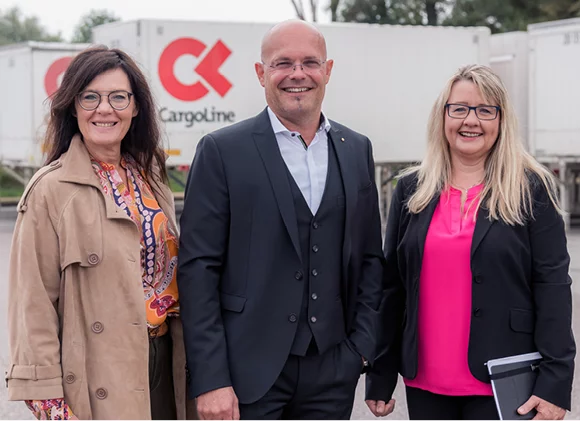
1993 Wackler and other freight forwarders found CargoLine, a cooperative for system transport services, which goes on to become a leading network for nationwide general cargo transport.
1995 – 1997
The fourth generation joins
1995 Gabriele and Beate Schwarz, the daughters of Günter Schwarz, join the family business. In the same year, Wackler and the company Würfel, based in Bremerhaven, jointly establish Garant Spedition und Logistik GmbH.
1996 Wackler celebrates its 150th anniversary. Günter Schwarz receives the Order of Merit of the Federal Republic of Germany, and the Uhingen logistics centre is opened.
1997 Oliver Schwarz, the eldest son of Hans-Jörg Schwarz, joins the company – marking the start of the fourth generation’s succession within the Schwarz Group. At CargoLine, the shipment management system CEPRA is introduced, enabling every individual parcel to be tracked throughout its transport and providing advance information flows.
1998 – 2001
More space for the company
1998 the 5,000-square-metre transhipment hall with an underfloor conveyor chain is built and put into operation in Göppingen-Holzheim.
1999 Wackler moves into its new office building and puts the high-bay warehouse into operation. The company now has more than 40,000 square metres of transhipment and storage space.
2001 Oliver Schwarz becomes managing director of Wackler. Wackler Dresden celebrates its 10th anniversary.
2003 – 2004
Everything in motion
2003 CargoLine celebrates its 10th anniversary in Eichenzell near Fulda, and Wackler’s workshop in Göppingen-Holzheim becomes an official Iveco authorised repair centre.
2004 Wackler expands the logistics hall in Göppingen-Holzheim. Günter Schwarz steps down from his operational role as managing director at Wackler at the end of the year.
2005 – 2008
Expansion and new construction
2005 the company expands the high-bay warehouse in Uhingen, which has 7,000 pallet spaces, by a further 3,000 spaces.
2006 as part of the integration of ABX into the CargoLine network, Wackler takes over the former ABX site in Radebeul.
2007 the transhipment hall in Göppingen-Holzheim is expanded by 3,000 square metres. In the same year, Wackler Dresden begins construction of a new terminal in Wilsdruff. The new freight forwarding facility will have more than 10,000 square metres of transhipment and storage space.
2008 Wackler puts the new freight forwarding facility in Wilsdruff into operation.
2012 – 2014
History and awards
2012 the Schwarz family celebrates its 100-year company history. To mark the occasion, the company chronicle “schwarz auf weiß” (“black and white”) is published. In the same year, the ground-breaking ceremony for the new high-bay warehouse in Wilsdruff takes place.
2013 the company is awarded “Partner of the Year” by CargoLine for the third year in a row. Wackler also receives the “Training Certificate” (“Ausbildungszertifikat”) from the Federal Employment Agency.
2014 the Friederike-Wackler-Museum opens its doors in Göppingen, inviting visitors to immerse themselves in the eventful history of Wackler and the Schwarz Group.
2015 – 2017
New and time-tested
2015 the company group publishes its first Corporate Social Responsibility Report (CSR Report) (schwarz-gruppe.net/schwarz-gruppe/nachhaltigkeit), which will be published every two years from then on. The Friederike-Wackler-Museum takes part in the Göppingen Culture Night for the first time.
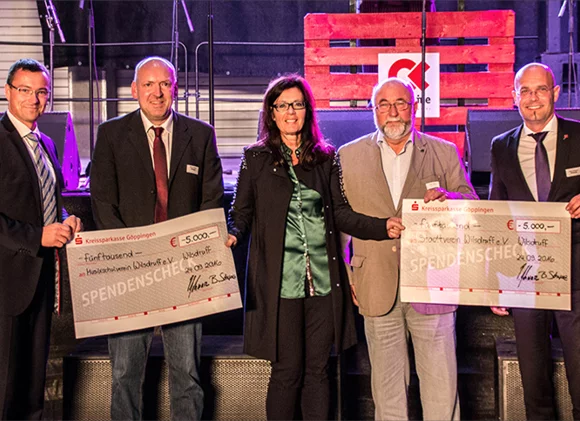
2016 the Schwarz Academy is officially launched. The same year, the Wilsdruff site celebrates its 25th anniversary.
2017 Wackler puts 120 new barcode scanners into operation. The second sustainability report (CSR Report) (schwarz-gruppe.net/schwarz-gruppe/nachhaltigkeit) is published.
2018 – 2020
Look back and a look ahead
2018 he new series “Kinder, Kapital, Karriere” (“Children, Capital, Career”) at the Friederike-Wackler-Museum, featuring five events, numerous speakers, and an accompanying special exhibition, is a great success.
2019 the book accompanying the “Kinder, Kapital, Karriere” series is published, along with the third CSR Report (schwarz-gruppe.net/schwarz-gruppe/nachhaltigkeit). On the company premises, Oliver Schwarz introduces 13 bee colonies.
2020 – 2023
The Fifth Generation
2020 Maximilian Schwarz, son of Oliver Schwarz, joins the family business as the fifth generation.
2020 the logistics facility in Wilsdruff is expanded with a 17,000 m² hazardous goods warehouse.
2021 Wackler celebrates its 175th company anniversary. The “Extrablatt” — a company chronicle with a twist — gives an overview of the company’s history and offers insights into the owner family and its employees.
2023 – 2026
2023 the company acquires a plot of land in Jebenhausen, securing the expansion of its logistics activities.
2024 the first long semi-trailer is put into operation at Wackler. ETG launches a project for hydrogen production.
2026 180 years of Wackler in Göppingen. Since 1846, Wackler has been more than just a logistics company — it’s a story of people, courage, and tireless dedication. Generation after generation, this is a place where things weren’t just transported, but built, developed further, and connected.